
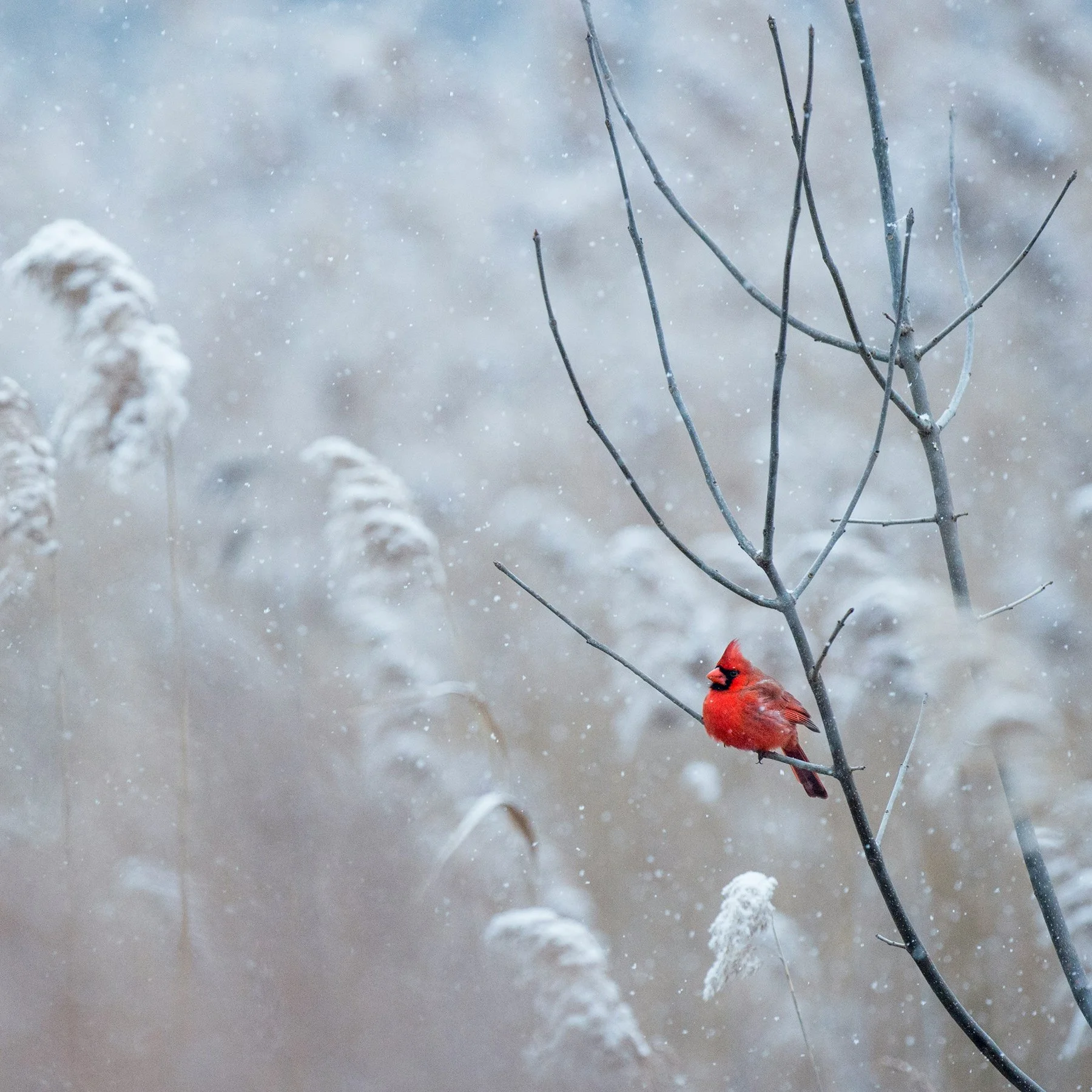
When winter arrives, why do some birds leave while others stick around?
It's 12 degrees outside. The trees are bare, the ground is frozen, and most sensible creatures seem to have disappeared. Except for the chickadee.
There it is, hopping between branches as though nothing particularly unusual is happening. A tiny ball of feathers, weighing about as much as a few coins, apparently unconcerned by the fact that winter has arrived. Which raises a reasonable question.
How on earth is it still alive?
Why Not Just Fly South?
Every autumn, billions of birds begin their seasonal migrations. Some travel thousands of miles, crossing entire continents in search of more favorable conditions. Others stay exactly where they are. It might seem like a questionable decision, particularly during a New England winter. But birds don't necessarily migrate because they're cold. For many species, the more important issue is food.
Swallows, for example, depend heavily on flying insects, which become scarce as temperatures fall. Heading south is a matter of survival. Chickadees, cardinals, and many woodpeckers have a different strategy. They can find seeds, berries, dormant insects, and other food sources throughout the colder months.
Migration also comes with risks. Long journeys demand enormous amounts of energy, and not every bird survives the trip. For those equipped to endure winter, staying put has its advantages.
A Very Small Furnace
A black-capped chickadee weighs roughly half an ounce. That's about the weight of three U.S. nickels. Yet it can survive temperatures well below freezing, sometimes in conditions that would make the rest of us reluctant to walk to the mailbox. Its secret isn't one remarkable adaptation, but several working together.
First, feathers. Birds fluff them up to trap insulating pockets of air close to their bodies, effectively creating their own little down jackets. Then there's metabolism. Chickadees maintain a high body temperature and burn substantial energy to stay warm. During winter, they spend much of their daylight hours searching for food to replenish those reserves.
They also store food. A chickadee may hide seeds in numerous locations, returning to retrieve them later. Remarkably, its brain can adapt seasonally to support the memory demands of this behavior. And when night arrives, some chickadees can lower their body temperature, reducing the energy required to survive until morning.
It's a sophisticated system for a creature that could comfortably fit in your hand.
Where Does Everybody Sleep?
We tend to notice birds during the day, but winter nights present a different challenge. When temperatures fall and winds pick up, finding a sheltered place to rest becomes essential. Some birds retreat into dense evergreens, where branches offer protection from wind and precipitation. Others seek out tree cavities or sheltered spaces that provide a little insulation from the elements.
Woodpeckers may excavate roosting cavities specifically for nighttime shelter. And certain small birds occasionally roost together, sharing a protected space and reducing heat loss.
None of this is particularly glamorous. But on a freezing January night, a small hole in a tree can be considerably more appealing than an exposed branch.
The Winter Garden Is Still Busy
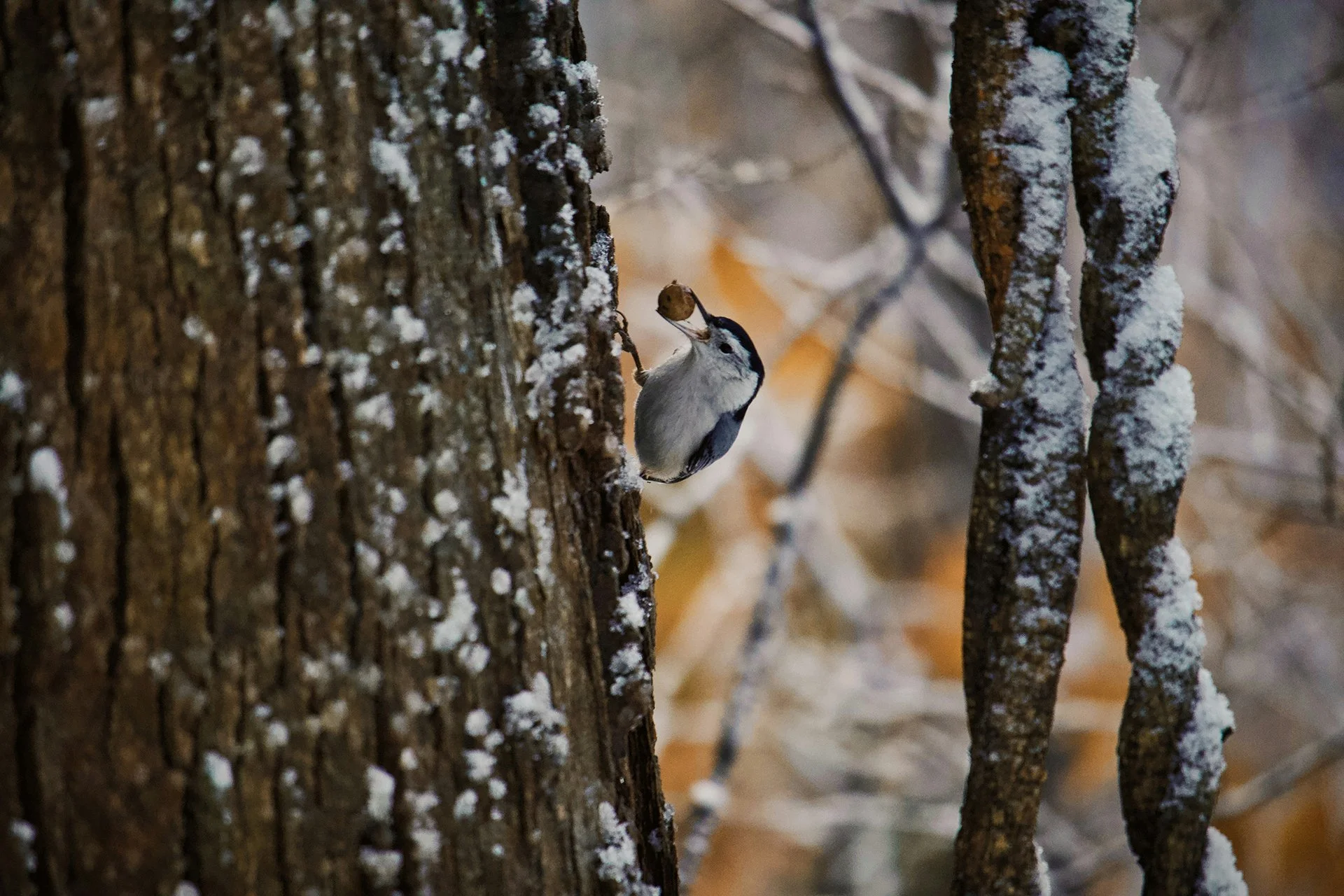
A garden can look remarkably quiet in December. The flowers are gone. Most leaves have fallen. The insects seem to have vanished. But look a little closer. A woodpecker may be searching beneath the bark of a tree. A cardinal might be investigating berries on a shrub. A flock of juncos may be scratching through fallen leaves for seeds.
Winter changes the activity. It doesn't bring it to a halt.
This is also why the plants we choose for our gardens matter beyond the growing season. Native trees and shrubs can provide seeds, berries, shelter, and habitat for insects that remain present through winter, even when we don't see them. Leaving some seed heads standing and allowing fallen leaves to remain in planting beds can help sustain this quieter ecosystem.
For those who maintain bird feeders, winter is an especially rewarding time to observe the visitors. Clean feeders, suitable food, and unfrozen water can provide useful supplemental resources. But even without a feeder, there's plenty to discover.
A Different Perspective on Winter
It's easy to think of winter as a season when nature shuts down. In reality, it's a season of extraordinary adaptation. Every chickadee darting between branches, every woodpecker tapping against a frozen tree, and every cardinal perched in a snow-covered shrub is quietly demonstrating just how resourceful birds can be.
The next time you look outside on a bitterly cold morning and spot a little bird going about its business, consider what it took for that bird to make it through the night. Then perhaps appreciate the fact that your own survival strategy involves central heating.
Further Reading & Resources
Audubon - How Do Birds Cope With Cold Winter Weather?
U.S. Fish & Wildlife Service — How Do Birds Keep Warm in he Winter?
American Bird Conservancy - This Winter, Make Your Backyard a Safe Haven for Birds